Biotechnology (Biotechnologie) B.Sc. at TU Berlin: Student Guide
Table of Contents
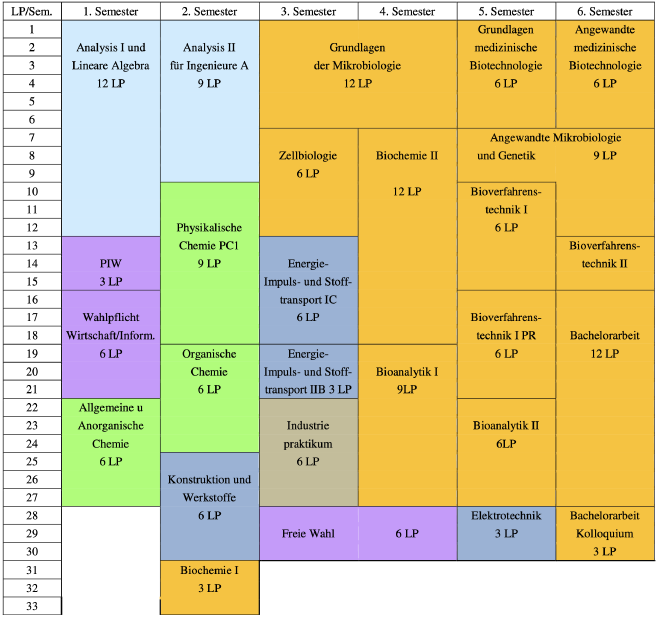
General structure #
Admission #
The grade you need varies from year to year, but the bar isn’t high. You need to pass C1 German, but you’ll need your English from the very first semester too. With any question you can either write to Kiana Karbasiyan, she helps biotech students specifically, or meet online via Zoom every Monday, Tuesday and Thursday between 9:00 and 11:00.
Groups #
- in the first few days, get someone to add you to the Ersties (first-years) WhatsApp group so you don’t miss important info. Later on, groups get created for every subject and the links get posted there. The group keeps being useful in later semesters too.
Important!
- don’t miss the registration dates for the subject itself, Tutorien (tutorials), exams, Praktika (lab courses) etc…
- the students’ WhatsApp group helps a ton, there’s always someone who knows!
- in the semester when you write your Bachelorarbeit (bachelor’s thesis), you can’t have just the thesis left, you have to have at least one other module too
- you can’t leave a Praktikum as that module (nobody understands why, but that’s how it is for now. We complained, and maybe by your time they’ll have changed it :) ) + check out MedBT
- you don’t have to follow the suggested study plan
- there are lots of people in their 9th and 11th semesters, so don’t panic about finishing in 6 semesters, nobody aims for that / tries to
Altklausuren (past exams): #
- ask tutors/other students
- look on studoco or freitagstunde
1st semester: #
AnaLina #
- lectures are for whoever feels like it, but what actually gets you through are the Tutorien (you need to find a good one, you can go to any group. I recommend Ashot and Shiva) and Altklausuren. Better to study with someone. The homework is harder than the Klausur (exam).
- Sprechstunden (office hours) help, and if you’re lucky they’ll help you with the homework (depends on the tutor).
PIW #
- a one-week project
- if you can’t decide, I recommend grabbing a spot (and they’re gone in the first few minutes!) in a project with Vera Meyer, because she’s an amazing teacher and offers interesting topics. You’ll have lectures with her in later semesters. I did Darmflora myself and we spent a whole week at the Charité. Happy with it.
- how it works: you make your choice and then after New Year you get one week off regular classes, during which you only work on the project. One day you’ll be in the lab, the other days are lectures (depends on the project). You work in groups of two or three and give your 10-minute presentation first in front of the students who picked the same project, and after that you merge your projects into one and present it (not everyone, only volunteers) in front of all the other students in the faculty who took this subject. Interesting and easy subject.
Wahlpflicht #
- there are two options: either programming or economics. The first one is harder. With the second you just learn to solve problems and there’ll be a few graphs. Altklausuren and homework will save you.
Allgemeine und Anorganische Chemie #
- there’ll be a week of Praktikum, then the exam
- online exam: super easy if you take notes :)
- it’s a repeat of school/Studienkolleg
- check out Konstruktion und Werkstoffe from the second semester and MiBi from the third!
2nd semester #
Analysis 2 (Ana 2) #
- easier than AnaLina once you’ve settled in a bit, since you’re not jumping from one topic to another
- the lectures are a matter of taste, the Tutorien help (you need to pick a good one, you can go to any group. I recommend Ashot and Shiva) and Altklausuren
- there are weekly sessions where you go through the lecture/homework and at the end the Altklausuren
- Sprechstunden help a lot if you find a good tutor
Physikalische Chemie (PC) #
- you need to find a good tutor
- there are no Altklausuren, you have to solve every problem they give you
- one of the few subjects lots of people fail
- big downside: it’s only offered in summer (better not to put it off, because later it’ll be tough with EIS)
Organische Chemie (OC) #
- the lecturer talks fast, but it’s interesting at the start, towards the end it gets more confusing. Better to work through all the problems from the Übungen (exercise classes) right away.
- the Praktikum takes the whole week and you’ll have to prep at home every day for the next day, because you have to fill in lab reports (or you can make friends with someone, sign up for the second group, and then use the answers from the first group and stress way less :))
- there are Altklausuren, so prep with those, but before that you’d better redo all the problem sheets from the semester once more. The answers will be on ISIS + Sprechstunden help.
- a subject lots of people fail, more than PC, but doable! Pass these two and there are no more »giants« after that :)
Konstruktion und Werkstoffe #
- there’ll be two lecturers and two lectures a week. Neither is very interesting and they don’t help with the exam.
- there are Altklausuren and they’re enough
- there’ll be two “Praktika” where you basically just watch videos and do tasks. You can compare with other students and use the Sprechstunden, which happen twice before the deadline. For the task with the graph, better use the chance and ask the professor/tutor.
- the subject isn’t hard and some people take it already in the first semester!
3rd semester #
Grundlagen der Mikrobiologie (MiBi) #
- the wonderful Professor Vera Meyer teaches it and she’s really inspiring! The lectures end before New Year. They’re all online and afterwards you can come (I recommend it) to a session where the lecture gets discussed, people ask questions, there’s a Kahoot (you answer questions and whoever gets the most points gets a gift from the professor) and she gives all kinds of useful info about biotechnology.
- there’s a Praktikum (10 sessions, once a week, with one (surprise) test and a solo project) and it’s better to do it in winter. But you’ll need to grab a spot in time! It’s interesting and chill.
- the subject runs for a year
- the exam grade gets added up with the grade from the Praktikum and the written exam
- there are Altklausuren
- nobody has ever failed it
- enjoy it! :)
Zellbiologie #
- depends on the professor, but I got unlucky. So I’m watching the lecture recordings from Corona times (they’re open access, just find the same module under past semesters on ISIS)
- the exam is oral and you’ll have to present 6 lectures (your choice)
Elektrotechnik #
- going to class doesn’t help you pass
- there are Altklausuren + problems from the lectures
Industriepraktikum #
- almost nobody does it in the third semester, because you need to do 6 weeks of Grundpraktikum (pretty much anything counts, you can e.g. work at REWE) and 6 weeks at a company.
- you can try doing an internship outside Germany + getting a scholarship for it
- Vera will give you a list of companies in Berlin you can apply to
Freie Wahl #
- lots of people take language courses
Grundlagen medizinische Biotechnologie (MedBT) #
- it’s from the fifth semester, but you can take it whenever you want - the subject is inspiring.
- big plus: you can take the exam at any time! Yep, even three years later! You just write an email to the professor and she’ll give you a Termin (appointment) for the oral exam. You’ll need to learn 6 lectures, but she can ask about the others too.
- people often leave it for the semester with the Bachelorarbeit, because it’s super convenient that you can take the exam any time!
- everyone passes
Bioverfahrenstechnik (BVT) #
- a subject from the fifth semester, but you can take it already in the third
- there’ll be 9 online homework assignments (you can find the answers)
- two exams online! you can do them in a group
- there’s a Praktikum as a separate module (two visits to bioreactors and you have to write a 30-page lab report, you can take these modules separately)
- the homework + the first exam already make up 60 percent of the total grade!
- everyone passes